Ingredient profile
Calcium in MemoHoney: what 18 mg of calcium carbonate means
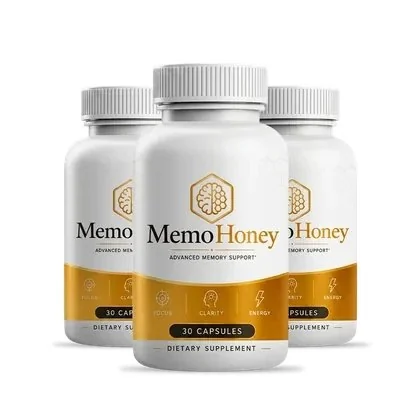
Calcium carbonate is a common calcium supplement, and MemoHoney lists 18 mg of calcium from it per capsule, which the label prints as 1.5% of the Daily Value. Adults need about 1,000 mg a day. The one cognition trial we found used 1,000 mg with vitamin D, about 55 times more, and found no effect on memory or dementia.
Written by the MemoHoney label deskUpdated
The ingredient
What is calcium carbonate in a supplement?
Calcium carbonate is a mineral salt that supplements use as a source of calcium, and the MemoHoney panel prints "Calcium (as calcium carbonate)" at 18 mg (MemoHoney label).
The 18 mg is the weight of the calcium itself, not of the whole salt. The label gives a Daily Value of 1.5%. The label makes no calcium claim.
| Name on the label | Calcium (18 mg as calcium carbonate, 1.5% DV) |
|---|---|
| What it is | A mineral; the panel lists the weight of the calcium itself, here from calcium carbonate |
| What it is sold for | Listed on the panel; a very small amount |
| Amount per capsule (label) | 18 mg (1.5% DV) |
| Amount used in research | Adults need about 1,000 mg a day from all sources; the memory trial we found used 1,000 mg with vitamin D |
| What the studies found | In 4,143 older women given 1,000 mg of calcium carbonate with vitamin D for about 8 years, there was no difference in dementia, mild cognitive impairment or cognition scores. That is about 55 times the 18 mg on this label, so a capsule with 18 mg adds about 1.5% of a day's calcium and no study ties it to memory. |
| Main caution | Calcium carbonate can interact with levothyroxine, some antibiotics and lithium at normal supplement doses; 18 mg is very small, but tell your pharmacist what you take. |
Label vs reference
Is 18 mg of calcium a meaningful amount?
No, 18 mg of calcium is a trace amount: adults need about 1,000 mg a day, so a capsule supplies under 2% of it (NIH ODS, Calcium).
Adult men aged 19 to 70 have a recommended 1,000 mg a day, and the upper limit is 2,500 mg for ages 19 to 50. Men average about 1,083 mg a day from food. A bottle of 30 capsules holds 540 mg, which is about half of one day's need. Calcium is the last row of the chart below.
- L-Arginine (base + AKG extract)400 mg on the label
Studies: 6.4 g a day in one memory pilot; up to 30 g a day for 90 days in a safety trial. Studies used about 16 to 75 times the label amount. (Teotia 2026, oral arginine pilot) (McNeal 2018, arginine 30 g safety)
- L-Citrulline (HCl + malate)200 mg on the label
Studies: 3 to 9 g a day in exercise and blood pressure trials; no memory trial found. Studies used about 15 to 45 times the label amount. (Chen 2016, BCAA arginine citrulline) (Trexler 2019, citrulline meta)
- Beta Alanine40 mg on the label
Studies: 1.6 to 6.4 g a day; ISSN says 4 to 6 g a day; no cognitive change in the one test found. Studies used about 40 to 160 times the label amount. (Hoffman 2014, beta-alanine soldiers) (ISSN beta-alanine stand)
- Niacin7.5 mg on the label
Reference: 16 mg NE is the Daily Value; 35 mg a day is the upper limit for supplements. The label is 47% of the Daily Value and 21% of the upper limit for supplements. (NIH ODS, Niacin)
- Calcium18 mg on the label
Reference: adults need about 1,000 mg a day from all sources; the cognition trial used 1,000 mg with vitamin D. The label is about 2% of what an adult man needs in a day. (NIH ODS, Calcium) (Rossom 2012, WHI calcium + D)
Log scale: each gridline is ten times the one before. Studied ranges are daily amounts from the trials linked on each row; the arginine row compares the label's 400 mg (200 mg base plus 200 mg of an AKG extract) with arginine studies, and the citrulline row 200 mg (two forms) with citrulline studies. Niacin and calcium rows show reference levels, not study doses. A bar being far away does not mean the capsule is unsafe or useless; it means the study results cannot be borrowed for it.
All five rows are compared on the formula page.
The research
Does calcium help memory?
We found no evidence that 18 mg of calcium helps memory, and the one relevant trial found no effect at 1,000 mg.
In the Women's Health Initiative, 4,143 women aged 65 or older took 1,000 mg of calcium carbonate with 400 IU of vitamin D, or placebo, for about 7.8 years. Dementia occurred in 39 women on calcium and 37 on placebo, and cognition scores did not differ (Rossom 2012, WHI calcium + D). The dose was about 55 times the label's, and it came with vitamin D.
The Cochrane review of vitamin and mineral strategies reached the same place: no meaningful effect on cognitive decline (Rutjes 2018, Cochrane vitamins).
Memory problems that are new, getting worse or getting in the way of daily life need a clinician, not a supplement.
Medicines
What are the calcium carbonate interactions?
Calcium carbonate interacts with levothyroxine, quinolone antibiotics, dolutegravir and lithium (NIH ODS, Calcium).
These are known at normal supplement doses. The 18 mg in one capsule is very small, so the risk from this row is likely low, but we found no study at that amount. Tell your pharmacist about every supplement you take. If you use any of the medicines in the table, ask before adding a new capsule.
| Medicine type | What to do |
|---|---|
| Levothyroxine (thyroid) | Ask your pharmacist about timing |
| Quinolone antibiotics | Ask your pharmacist about timing |
| Dolutegravir (HIV) | Ask your prescriber |
| Lithium | Ask your prescriber |
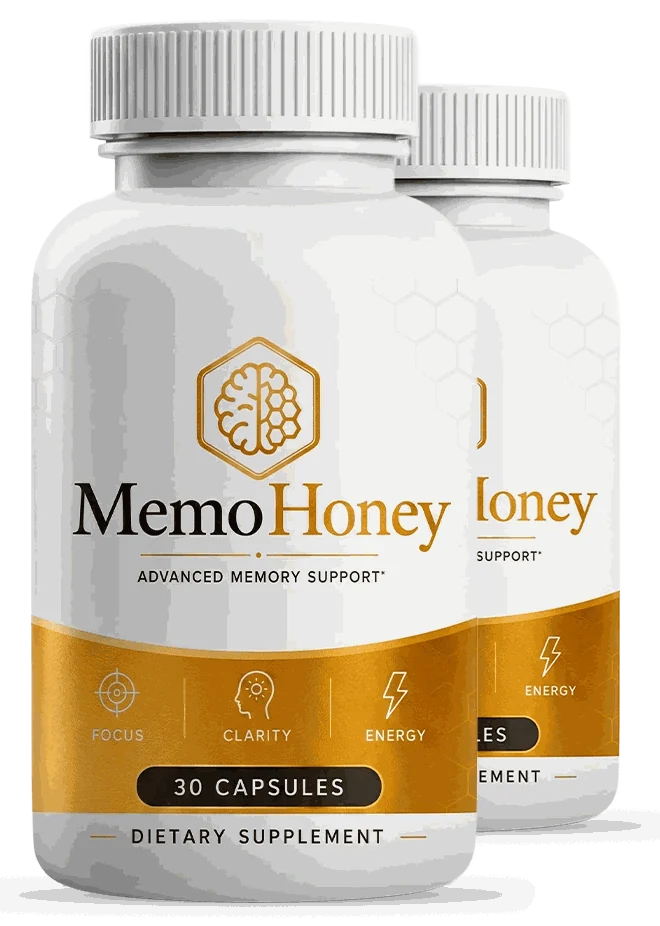
MemoHoney capsules: 30 to a bottleOne capsule a day · 2, 3 or 6 bottles · price and shipping shown at checkout
See the priceSafety
What are the side effects of calcium carbonate?
The usual side effects of calcium carbonate are gas, bloating and constipation, and they mostly come with larger doses (NIH ODS, Calcium).
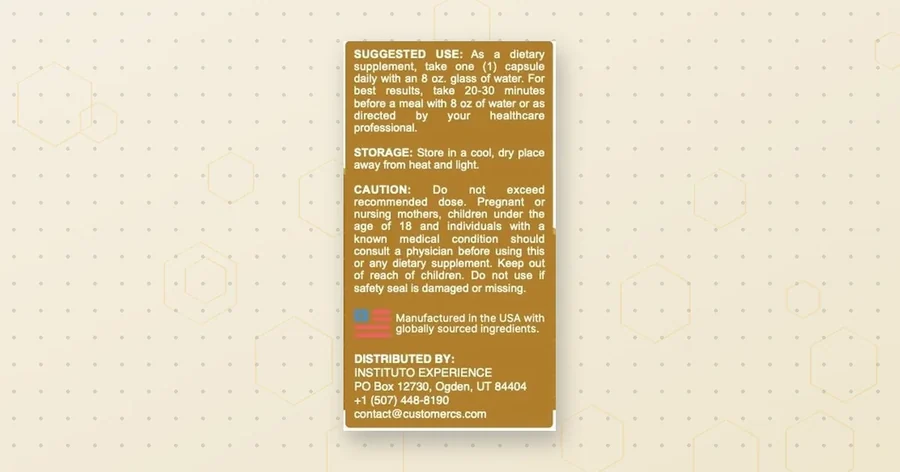
It is absorbed best with food. The MemoHoney label suggests taking the capsule 20 to 30 minutes before a meal with 8 oz of water. Some studies link high supplemental calcium to heart disease and others do not, and intakes within the upper limit are considered safe by an expert panel. At 18 mg, this row sits far below that limit.
The same capsule also holds arginine. Ask your doctor or pharmacist first if you take nitrates, sildenafil-type medicines, blood pressure medicines, blood thinners or diabetes medicines, or if you have had a heart attack (Mayo Clinic, L-arginine). Chest pain, fainting or trouble breathing: call 911. Keep taking prescribed medicine as directed.
Why it is there
Why is there calcium in MemoHoney at all?
The label does not say why calcium is there, and we will not invent a reason.
The panel does not tell us. What it does tell us is the amount, 18 mg, and that is too small to count toward daily needs. If you take a calcium supplement or a multivitamin, the capsule changes your total by about 1.5%.
The takeaway
Should calcium be the reason you choose MemoHoney?
No, because 18 mg is a trace and no study ties it to memory.
Fair point: the amount is printed. See the supplement facts and side effects.
FAQ
Calcium and MemoHoney: common questions
How much calcium is in MemoHoney?
MemoHoney has 18 mg of calcium per capsule, from calcium carbonate, printed as 1.5% of the Daily Value. A 30-capsule bottle holds 540 mg. Adults need about 1,000 mg a day, so the capsule is a trace.
Is calcium carbonate a good form of calcium?
It is a common one, and it is absorbed best with food. It can cause gas, bloating and constipation at larger doses. The ODS notes interactions with levothyroxine, quinolone antibiotics, dolutegravir and lithium.
Does calcium help with memory?
We found no evidence that it does. A trial of 4,143 older women took 1,000 mg of calcium with vitamin D for about 7.8 years and found no difference in dementia or cognition. That dose is about 55 times the label's.
Does 18 mg of calcium interact with medicines?
Calcium carbonate is known to interact with levothyroxine, some antibiotics, dolutegravir and lithium at normal supplement doses. At 18 mg the risk is likely small, but we found no study. Tell your pharmacist about every supplement you take.
What is the Daily Value for calcium?
The ODS gives 1,300 mg as the Daily Value, which would make 18 mg about 1.4%. The MemoHoney label prints 1.5%. Both say the same thing: the capsule supplies a trace of a day's calcium.
Can I take MemoHoney with my calcium supplement?
The label does not address it. The capsule adds only 18 mg to your total, so calcium itself is unlikely to matter. The arginine in the capsule can interact with some medicines, so ask your pharmacist about the combination.
Who wrote this
Written and reviewed by
Pages built from the label, the seller's brief and linked NIH, FDA, CDC, FTC and peer-reviewed sources.
Last updated . Read our editorial standards and how we check reviews. This website is the information site of a USA Authorized MemoHoney Retailer. It is not the manufacturer, and the label names INSTITUTO EXPERIENCE (Ogden, Utah) as the distributor. We earn money when you buy through our order links.
Keep reading
More about MemoHoney


USA Authorized MemoHoney Retailer
Ready to look at MemoHoney?
Check your medicines first, especially nitrates, ED medicines and blood pressure medicines. Then pick a pack: 2, 3 or 6 bottles of 30 capsules. The checkout shows the price, the shipping and the money-back guarantee as printed there.
- Secure checkout on the seller's site
- Money-back guarantee, as printed at checkout
- Shipping shown at checkout